Hi all,
I know it has been a while since the last blog post, but I have been busy building the site — here are the main updates:
Flash app is in dev / live — a revision flashcard app. (I integrated the database storage on Supabase — this is a first...)
Stylistic changes — building for all screens including mobile devices is a whole new ball game.
Vibe in action — teaching and building live
Over the last few weeks I’ve gone back to teaching and have been trying something a little different: building and iterating small apps in the evenings (around 6pm, before college or when I can after the kids wake me) and then using those apps with students the following day. The idea is simple — rapid prototyping, quick classroom feedback, and immediate usage. Sometimes the apps are rough, but they often spark great classroom activity.
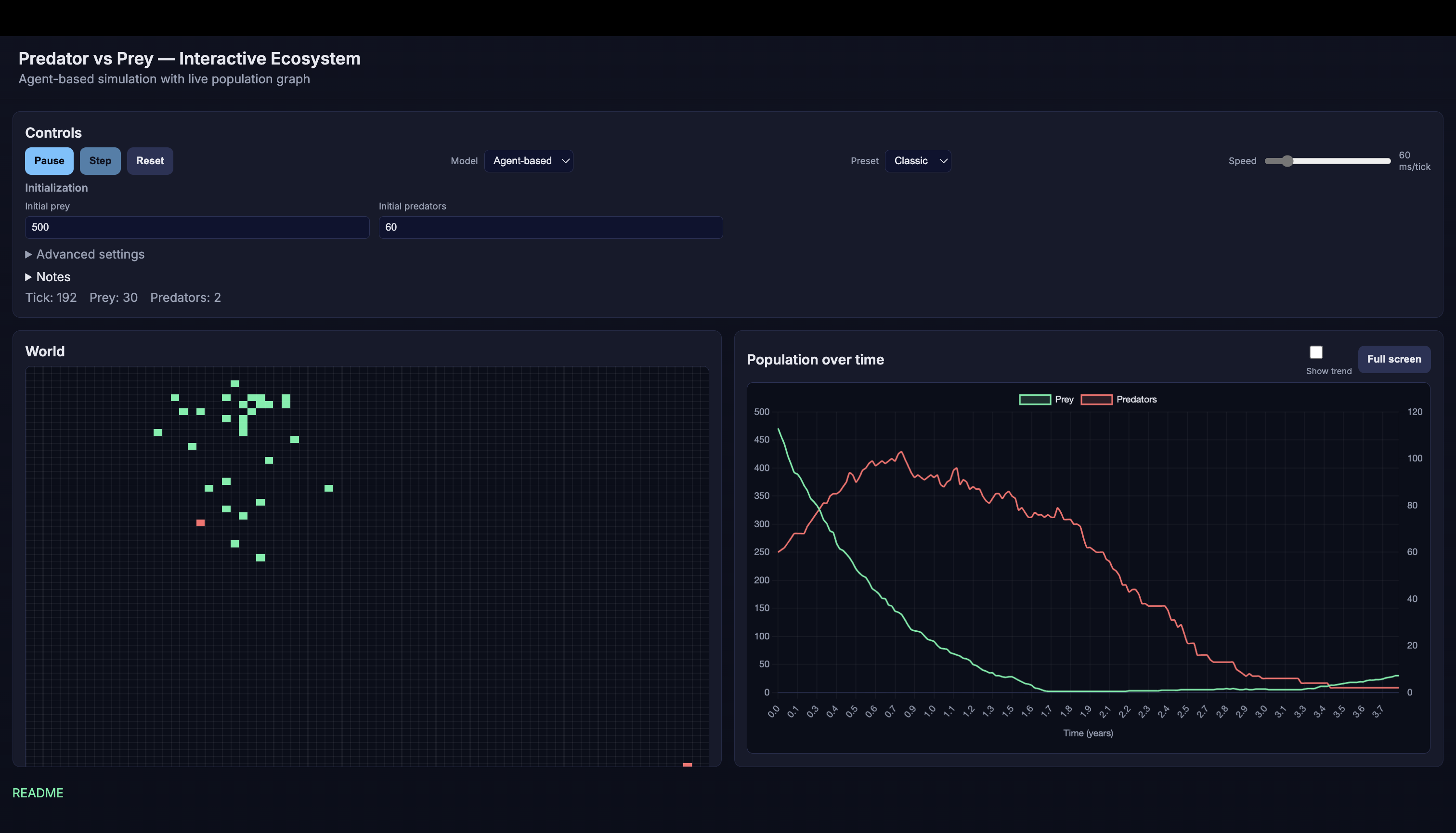
Predator vs Prey — Interactive Ecosystem
An agent-based simulation with live population graphs and controls. Students can set initial prey/predator numbers, change presets and speed, and watch the emergent dynamics on a chart. I use this to spark hypothesis-driven activity: what happens if we halve the prey?
An agent-based simulation with live population graphs and controls. Students can set initial prey/predator numbers, change presets and speed, and watch the emergent dynamics on a chart. I use this to spark hypothesis-driven activity: what happens if we halve the prey?
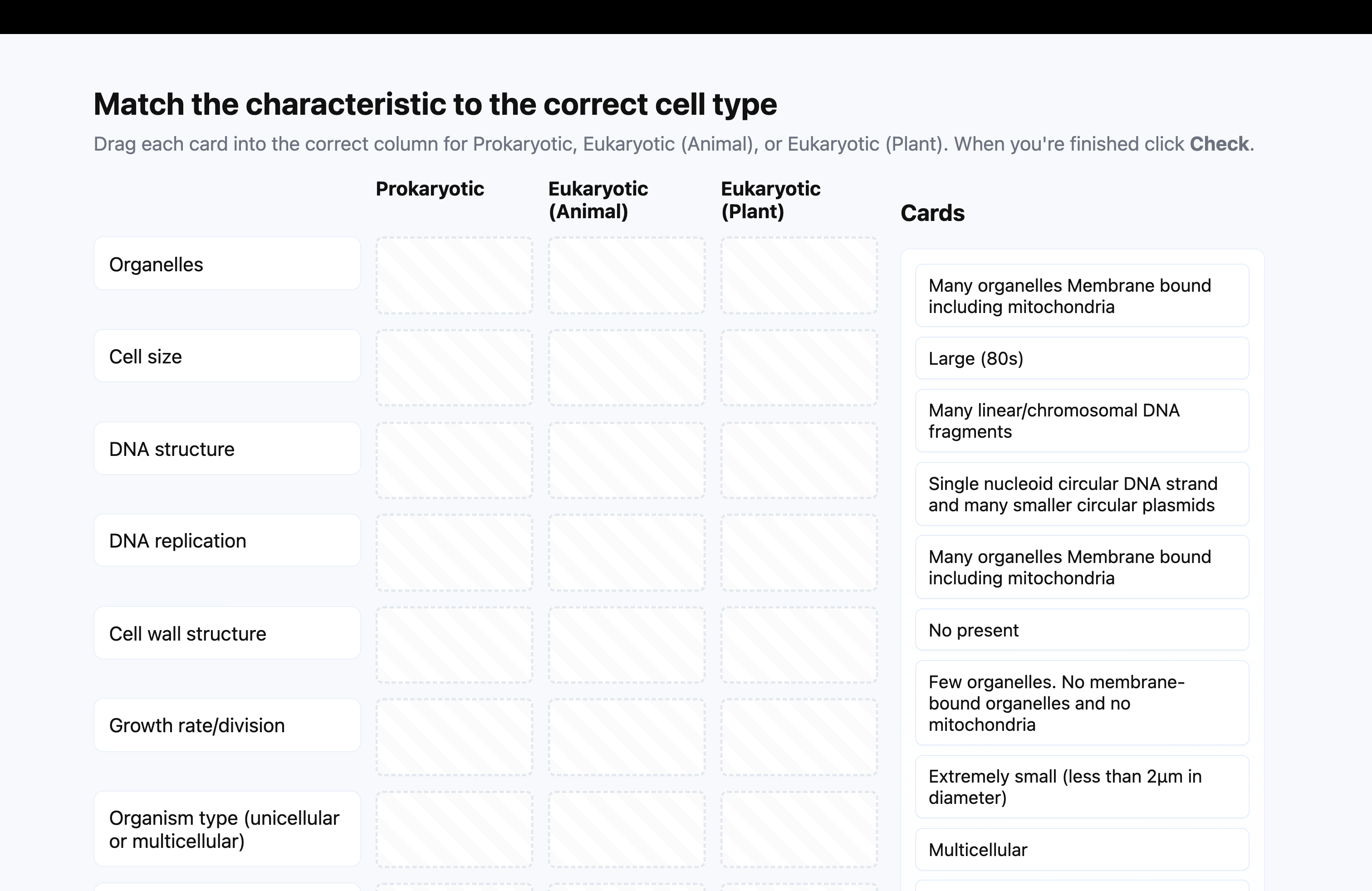
Prokaryotic vs Eukaryotic
A drag-and-drop matching activity where students match organelles, DNA structure, and other characteristics to Prokaryotic, Eukaryotic (Animal), or Eukaryotic (Plant) cells. It’s a quick, revision-friendly activity that works well on tablets.
A drag-and-drop matching activity where students match organelles, DNA structure, and other characteristics to Prokaryotic, Eukaryotic (Animal), or Eukaryotic (Plant) cells. It’s a quick, revision-friendly activity that works well on tablets.
Pedagogy — uncertain but promising
I’m honest about my uncertainty: I’m not completely sure of the pedagogical value of every app I make. Simulations and gamified activities can be excellent for exploration and engagement, but they don’t automatically ensure deep conceptual understanding. That said, using these apps live in class gives me immediate evidence: where students hesitate, what misconceptions appear, and which interactions lead to productive discussion. This immediate feedback loop is valuable and helps me iterate quickly.
To ground this a little in the literature, there is a well-regarded review suggesting that simulations help when students are guided to explore and reflect. A useful reference is:
de Jong, T., & van Joolingen, W. R. (1998). Scientific discovery learning with computer simulations of conceptual domains. Review of Educational Research, 68(2), 179–201. https://doi.org/10.3102/00346543068002179
In short: tools help, but scaffolding and reflection are what turn exploration into learning.
What’s next
- Continue iterating on the Flash app — integrate more robust Supabase storage and sync across devices.
- Improve responsive styles so the apps work smoothly on mobile devices used in classrooms.
- Add short classroom activities and teacher prompts to each app so they’re more than just interactive toys.
If you want to try the new apps, they’re linked from the Vibe Apps page. I’d love to hear how you use them or any classroom ideas.
Let’s keep iterating — building small, testing in class, and learning from students’ reactions.

Category: Classroom tools, Simulations, Revision